
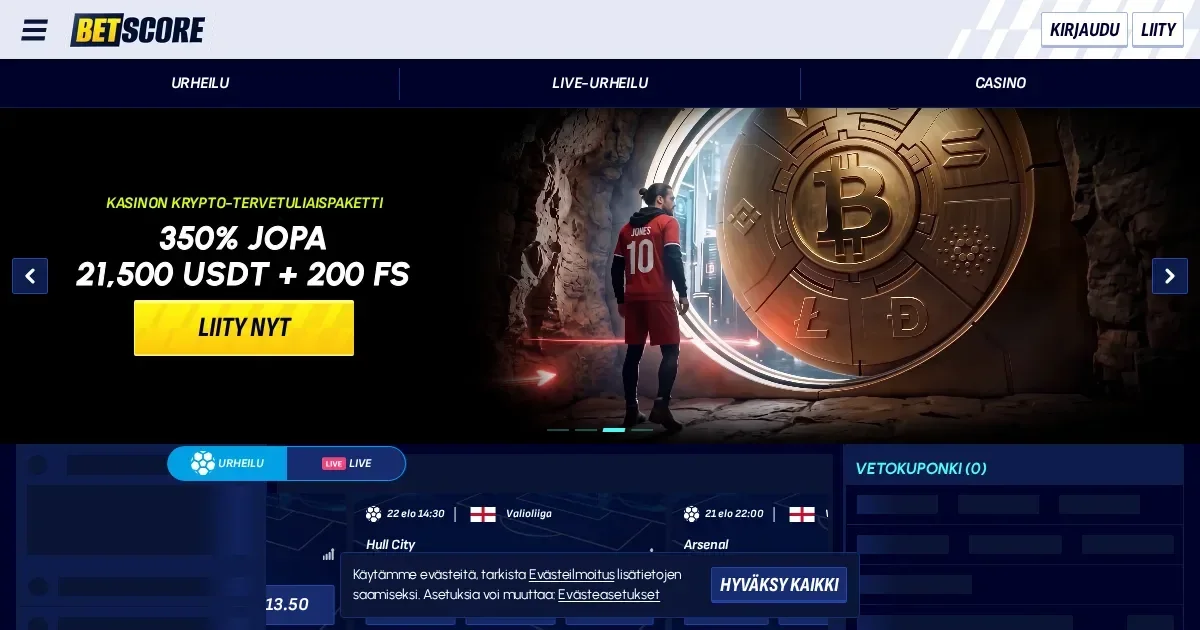
Gambling should be a form of entertainment, not a way to make money or escape problems. For most people it stays that way—an occasional flutter, a bit of fun, money set aside that won't be missed. But for some, it stops being fun and starts becoming a problem. Betscore operates in a space where that line can blur, and recognising the signs early matters.
Why responsible gambling matters
Gambling is designed to be engaging. The uncertainty, the near-misses, the possibility of a win—these keep people playing. That's fine when it's under control. It becomes a problem when gambling starts to dominate time, money or headspace that should go elsewhere. The consequences can be financial, but they're often emotional and relational too: stress, secrecy, damaged relationships, work suffering.
The earlier someone recognises they're heading toward trouble, the easier it is to pull back. This page covers the warning signs, the questions worth asking yourself, the tools Betscore offers to help players stay in control, and where to turn when gambling stops being entertainment.
Warning signs: when gambling gets out of hand
Not every problem looks the same, but certain patterns show up repeatedly. If any of these feel familiar, it's worth pausing to think about what's happening:
- Chasing losses—playing longer or betting more to win back what you've lost
- Gambling with money earmarked for bills, rent or essentials
- Lying to family or friends about how much time or money you're spending
- Feeling anxious, irritable or restless when you're not gambling
- Borrowing money or selling possessions to fund more play
- Neglecting work, study or relationships because gambling takes priority
- Thinking constantly about the next bet, even when you're doing something else
None of these on its own is proof of a problem, but if several apply—or if one applies strongly—it's a signal that gambling has moved past entertainment.
A few questions to ask yourself
These aren't diagnostic, but they can help clarify where things stand. Answer honestly—no one else needs to see your answers.
- Do you gamble to escape boredom, stress or emotional pain?
- Have you missed important commitments because you were gambling?
- After losing, do you feel a strong urge to return immediately and try to win it back?
- Have you lied about your gambling to someone you care about?
- Do you feel guilty or ashamed after a session, but find yourself back at it soon after?
- Has gambling caused arguments with family or friends?
- Have you tried to cut down or stop, and found you couldn't?
- Do you gamble longer or with more money than you planned?
If you answered yes to several of these, it's worth speaking to someone. That doesn't mean you have a severe problem—it means it's sensible to get perspective before things get worse.
Betscore's control tools
The operator provides self-exclusion as a way for players to close off their own access. To request it, contact Betscore's support team via email at [email protected]. Self-exclusion is a formal process: once requested, the account is blocked for the period you specify, and you cannot reverse it early. It's designed for situations where someone recognises they need a complete break.
Understand what self-exclusion covers and what it doesn't. Requesting exclusion from Betscore blocks access to that operator's platform. It does not block access to other sites, and it is not automatically shared across the industry. If you need wider protection, the national tools described below are a better fit.
Tips for gambling sensibly
Staying in control comes down to a few practical habits. They're not complicated, but they do require sticking to them even when a session is going well—or badly.
- Set a budget before you start, and treat it as money you're spending on entertainment, not investing. Once it's gone, stop.
- Set a time limit for each session. Use an alarm if that helps. When it goes off, finish the hand or spin and walk away.
- Never gamble to recover losses. Chasing is the fastest way to turn a bad session into a disastrous one.
- Don't gamble when you're upset, stressed or under the influence. Decisions made in those states tend to be poor ones.
- Keep gambling separate from other parts of your life. If it's eating into time you'd normally spend with family, friends or hobbies, that's a red flag.
- Track what you're spending. It's easy to lose track of cumulative losses when you're playing frequently. Write it down, or check your account history regularly.
Where to find help in Australia
If gambling is causing problems, support exists. You don't need to wait until things are unmanageable—getting help early is easier and more effective than waiting.
National Gambling Helpline
1800 858 858—free to call, 24 hours a day, seven days a week. Trained counsellors offer confidential support, whether you're gambling yourself or affected by someone else's gambling. You can also access free online chat and email counselling through Gambling Help Online at gamblinghelponline.org.au.
BetStop – National Self-Exclusion Register
BetStop is a free service run under the Australian Communications and Media Authority (ACMA). Registering excludes you from all licensed Australian online and phone wagering providers at once, for a minimum of three months and up to life. It covers sports betting, race betting and other licensed wagering services. Visit betstop.gov.au to register.
Worth noting: BetStop covers licensed wagering providers. It does not extend to online casino games, which are not lawfully provided to people in Australia. If you need to block access to casino gaming, speak to the operator directly or use the blocking software described below.
Blocking software
Two widely used tools can block access to gambling sites across all your devices:
- Gamban—subscription-based software that blocks gambling sites and apps. It works across desktop, mobile and tablet. Visit gamban.com for details.
- BetBlocker—a free tool that blocks gambling content. It covers most platforms and can be set to block for a fixed period. See betblocker.org.
International support organisations
Additional resources that operate internationally include:
- Gamblers Anonymous—peer support groups for people affected by gambling. Find meetings at gamblersanonymous.org.au.
- Gambling Therapy—free online support and counselling in multiple languages. Visit gamblingtherapy.org.
Protecting minors
Gambling is restricted to adults. Betscore's terms require users to be at least 18 years old, and the operator states that accounts must be registered in the player's own name with accurate information. If you have children or teenagers in your household, consider using parental control software to block access to gambling sites on shared devices. Most modern operating systems and routers offer these controls as standard features.
Talk openly with young people about gambling. The earlier they understand the risks and the mechanics—how games are designed, how odds work, why the house always wins in the long run—the better equipped they are to make informed decisions later.
Contact and further information
If you have questions about Betscore's responsible gambling policies or need help navigating its self-exclusion process, contact the operator's support team directly. For questions about this site's content, write to the editorial team at [email protected].
For urgent support or advice, call the National Gambling Helpline on 1800 858 858 or visit betstop.gov.au. These services are confidential, free, and available any time.
Gambling should be entertainment, not a chore. If it's stopped being fun, it's time to step back and get perspective. Help is available, and reaching out is the first step toward getting things back under control.
Disclaimer: This site is an independent information portal. We do not operate Betscore, take bets, or organise gambling of any kind. We cannot resolve account, deposit or withdrawal issues—those requests must go to the operator directly. Access to gambling services is restricted to individuals aged 18+ only. For confidential support, contact the National Gambling Helpline on 1800 858 858 or visit betstop.gov.au.